
Main Line Health earns “LGBTQ Health Care Equality Top Performer” designation in Human Rights Campaign Foundation’s Healthcare Equality Index
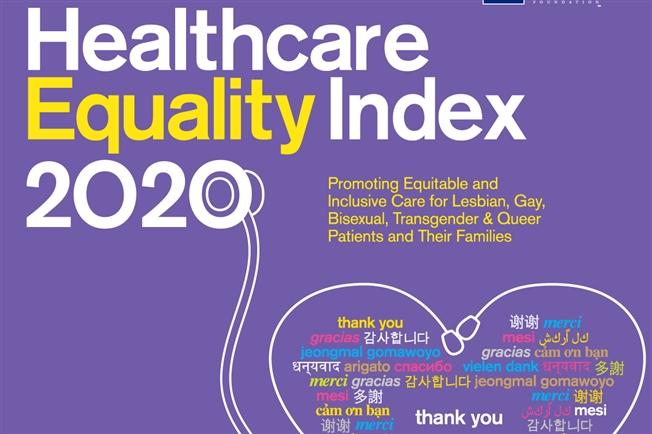

“Main Line Health is committed to fostering an equitable, inclusive environment so that all who walk through our doors will feel seen, welcomed and – most importantly – receive safe, high quality care,” said Jack Lynch, President and CEO, Main Line Health. “We are honored to be recognized by HEI, and we know that it is more important than ever to continue our work to fully eliminate disparities in care and strengthen the diversity and inclusivity of our organization for the benefit of both patients and staff.”
“From the previously unimaginable impact of the COVID-19 pandemic to the horrific incidents of racial violence targeting the Black community, the events of the past year have brought about so much pain and uncertainty. Yet, even during this moment of profound unrest, we are seeing more of our humanity and resilience come to life. For me, nowhere is that more true than through the tireless dedication of our health care providers and the intrepid support and administrative staff members by their sides that show up every day to ensure this life-saving work continues,” said HRC President Alphonso David. “The health care facilities participating in the HRC Foundation’s Healthcare Equality Index (HEI) are not only on the front lines of the COVID-19 pandemic, they are also making it clear from their participation in the HEI that they stand on the side of fairness and are committed to providing inclusive care to their LGBTQ patients. In addition, many have made strong statements on racial justice and equity and are engaging in efforts to address racial inequities in their institutions and their communities. We commend all of the HEI participants for their commitment to providing inclusive care for all.”
Every year, HRC recognizes the health care facilities that participate in the HEI for their dedication and commitment to LGBTQ inclusion. HRC also extends its deepest gratitude to these facilities for their courageous fight against COVID-19 and their commitment to addressing racism and injustice. As the final HEI surveys were submitted in March, health care facilities were kicking into overdrive to meet the challenges of COVID-19. Many faced a lack of equipment, staffing shortages and surging demand. Two months later, as the fight against COVID-19 continued, the murders of George Floyd and Breonna Taylor by police officers thrust America’s structural racism into the spotlight. HEI participants issued strong statements on racial justice and equity, participated in White Coats for Black Lives demonstrations and announced new programs to address racial inequities in their institutions and their communities.
In the 2020 report, an impressive 495 facilities earned HRC’s “LGBTQ Health Care Equality Leader” designation, receiving the maximum score in each section and earning an overall score of 100. Another 193 facilities earned the “Top Performer” designation for scoring from 80 to 95 points. With 90% of participating facilities scoring 80 points or more, health care facilities are demonstrating concretely that they are going beyond the basics when it comes to adopting policies and practices in LGBTQ care.
The remarkable progress reflected in the 2020 HEI includes:
- 92% of participants met the HEI's training requirements, completing more than 150,000 hours of staff training in LGBTQ patient-centered care.
- 99% of HEI participants documented that they include both “sexual orientation” and “gender identity” in their patient non-discrimination policy.
- 99% of HEI participants documented that they include both “sexual orientation” and “gender identity” in their employment nondiscrimination policy.
- 53% of HEI participants indicated that their facility has a policy or policies that specifically outline procedures and practices aimed at eliminating bias and insensitivity, and ensuring appropriate, welcoming interactions with transgender patients.
- After many years of trailing their corporate counterparts in the provision of transgender-inclusive health care benefits for employees, HEI participating healthcare facilities are nearly on par with the HRC Foundation’s Corporate Equality Index (CEI) participants as 80% have at least one health care plan that offered this benefit. The latest CEI noted 85% of participants having such benefits.
In addition to active survey participants, the HRC Foundation proactively researched the key policies at over 1,000 non-participating hospitals. Unfortunately, the adoption rate at these researched hospitals stands in stark contrast to the near-perfect adoption by active participants. Among the researched hospitals in which we were able to find or obtain enumerated patient non-discrimination policies, only 67% have policies that include both “sexual orientation” and “gender identity,” and only 63% were found to have an LGBTQ-inclusive employment non-discrimination policy. The equal visitation policy, at 93%, is the only one that comes close to matching the rate of the participating facilities.
About Main Line Health
Main Line Health® is a not-for-profit health system serving the greater Philadelphia region. The System comprises five hospitals, seven health centers, more than 160 outpatient and physician practice locations, over 14,500 employees and more than 2,200 employed and independent physicians and advanced practice providers.
Founded in 1985, Main Line Health includes four of the region’s most respected acute care hospitals — Lankenau Medical Center, Bryn Mawr Hospital, Paoli Hospital and Riddle Hospital — as well as Bryn Mawr Rehab Hospital, one of the nation’s premier facilities for rehabilitative medicine. The System also includes Mirmont Treatment Center, which provides treatment and support for substance use disorders; Main Line Health HomeCare & Hospice; Main Line HealthCare, its employed multispecialty physician network; Lankenau Institute for Medical Research, a leading biomedical research organization; and Main Line Health Centers offering primary and specialty care, lab, radiology and other outpatient services in Broomall, Collegeville, Concordville, Devon, Exton, King of Prussia and Newtown Square.
Main Line Health brings together physicians, advanced practice providers, nurses, researchers and other healthcare professionals across a broad network of inpatient, outpatient, home-based and community-based services. Through this integrated approach, the System delivers high-quality, comprehensive care across the continuum — from primary care and preventive services to complex specialty, surgical, trauma, emergency, rehabilitative, behavioral health, home care and hospice services — with a focus on making care accessible in the communities where people live and work.
Main Line Health also collaborates with leading clinical partners to expand access to specialized care. Through its affiliation with Children's Hospital of Philadelphia, pediatric care is provided at select Main Line Health locations, including neonatal intensive care units at its acute care hospitals and Bryn Mawr Hospital’s Inpatient Pediatric Unit and Emergency Department. Jefferson Health neurosurgeons and neurointerventionalists also provide 24/7 specialized care, including neurointervention and lifesaving stroke care.