
Lankenau Heart Institute at Paoli Hospital first in the region to implant world's smallest pacemaker which can now treat AV block
New device means more patients are now candidates for a leadless pacing option
AV block is a condition where the electrical signals between the chambers of the heart (the atria and the ventricles) are impaired. Pacemakers, the most common way to treat AV block, help restore the heart’s normal rhythm and relieve associated symptoms by coordinating the electrical activity of the atria and the ventricles. When this process—known as AV synchrony—is achieved, patients are healthier and have improved quality of life, as well as increased blood flow from the left ventricle. Historically, patients with AV block have been treated with traditional dual-chamber pacemakers implanted in the upper chest, under the skin, below the collar bone, and connected to the heart using thin wires called “leads.”
“Our cardiac team is thrilled to be leading the way in improving care for our patients, ” said Dr. Goldstein. “With this technology, our patients can benefit from a life of leadless pacing, including a minimally invasive implant procedure and no visible device.”
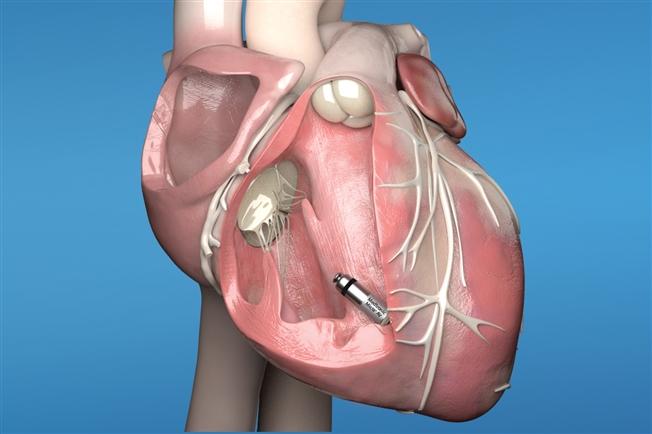
Comparable in size to a large vitamin, Medtronic’s™ Micra AV can deliver pacemaker therapy via a minimally invasive approach. During the implant procedure, the device is inserted through a catheter and implanted directly into the heart. Because Micra AV does not require leads or a surgical “pocket” under the skin, potential sources of complications related to leads and pockets are eliminated—as are any visible signs of the device.
“This incredible pacemaker technology helps our clinicians to provide advanced cardiac treatment that improves the quality of life for our patients,” says William Gray, MD, system chief of the division of cardiovascular disease at Main Line Health and president of Lankenau Heart Institute.
Identical in size and shape to the original Micra Transcatheter Pacing System (TPS) approved in 2016, Micra AV has several additional internal atrial sensing algorithms which detect cardiac movement, allowing the device to adjust pacing in the ventricle to coordinate with the atrium, providing “AV synchronous” pacing therapy to patients with AV block.
“Lankenau Medical Center participated in the pivotal global clinical trial and was one of the first hospitals in Pennsylvania to offer the Micra® Transcatheter Pacing System (TPS for patients with bradycardia),” says John Mitchell, system director, Main Line Health Cardiovascular Services and Lankenau Heart Institute. “It’s exciting that we can continue to expand the use of the MICRA pacemaker to deliver the latest technological advances in arrhythmia management to our cardiac patients across Main Line Health.”
Micra AV was approved by the U.S. Food and Drug Administration in January 2020.For information about the Lankenau Heart Institute’s advanced cardiac care, visit mainlinehealth.org/heart.
About Main Line Health
Founded in 1985, Main Line Health® is a not-for-profit health system serving the Philadelphia region and beyond. Main Line Health consists of five hospitals, seven health centers and over 150 medical practice locations. The System has more than 14,000 employees and over 2,100 employed and independent physicians and advanced practice providers.
At its core are four of the region's most respected acute care hospitals — Lankenau Medical Center, Bryn Mawr Hospital, Paoli Hospital and Riddle Hospital — as well as one of the nation's premier facilities for rehabilitative medicine, Bryn Mawr Rehab Hospital. Main Line Health also includes Mirmont Treatment Center for drug and alcohol recovery; Main Line Health HomeCare & Hospice, providing skilled home healthcare and hospice services; Main Line Health Centers, primary and specialty care, lab and radiology and other outpatient services located in Broomall, Collegeville, Concordville, Devon, Exton, King of Prussia and Newtown Square; and Lankenau Institute for Medical Research, a biomedical research organization.
Main Line Health's medical staff benefits from a collaborative relationship including independent physicians, community healthcare professionals and hospital-based experts from Main Line HealthCare, the employed multi-specialty physician network of Main Line Health.
Main Line Health collaborates with top experts to deliver exceptional specialty care. Through our affiliation with the Children's Hospital of Philadelphia, doctors and advanced practice providers care for pediatric patients at select Main Line Health locations, including the neonatal intensive care units at Main Line Health's four acute care hospitals, as well as Bryn Mawr Hospital's Inpatient Pediatric Unit and Emergency Department. Jefferson Health neurosurgeons and neurointerventionalists provide 24/7 specialized care, including neurointervention and lifesaving stroke care, and trauma surgeons provide critical care to our patients. Through our affiliation with Sheppard Pratt — a nonprofit provider of mental health services, substance use, developmental disability and other comprehensive behavioral health support — patients receive compassionate care in a welcoming environment.
For more information, visit mainlinehealth.org and connect with us on social media:
LinkedIn: www.linkedin.com/company/main-line-health
Facebook: www.facebook.com/mainlinehealth
X (formerly known as Twitter): www.twitter.com/mainlinehealth
Instagram: www.instagram.com/mainlinehealth
About Lankenau Heart Institute
Lankenau Heart Institute is Main Line Health's premier comprehensive cardiovascular program, bringing together the collective expertise of cardiologists, cardiovascular surgeons and advanced practice providers across all four of the System's acute care hospitals — Lankenau Medical Center, Bryn Mawr Hospital, Paoli Hospital and Riddle Hospital. Through a coordinated approach, Lankenau Heart Institute offers a full continuum of high-quality cardiovascular care, from prevention and diagnostics to advanced treatments and rehabilitation, delivered with a commitment to excellence in outcomes and patient experience.
A leader in innovation, Lankenau Heart Institute is at the forefront of minimally invasive and transcatheter procedures for coronary revascularization, valve repair and replacement, complex aortic surgery and the treatment of advanced heart failure and arrhythmias. Its pioneering work in robotic-assisted and beating-heart techniques and minimally invasive valve repair continue to shape the future of cardiovascular care. With a robust and growing presence in national clinical trials, its physicians regularly participate in groundbreaking research focused on the latest therapies, technologies and procedures, focusing primarily on less invasive approaches.