Advanced neonatal intensive care, close to home: Brittany and Tachina’s stories

Each year in the U.S., 1 in 10 babies is born before 37 weeks, which is also known as preterm. These infants are more likely to face health challenges like breathing problems, anemia, sepsis and jaundice, and they require medical support and continuous monitoring in specialized nurseries called neonatal intensive care units (NICUs).
When caring for premature infants, the last thing families should worry about is traveling far from home to access the care they need. Through Main Line Health's affiliation with Children's Hospital of Philadelphia (CHOP), families can access advanced neonatal care close to home. CHOP neonatologists and neonatal advanced practice providers care for babies in Level II and III NICUs across Main Line Health's four hospitals, bringing specialized pediatric expertise to families in their own communities.
Read on to learn about the advanced neonatal intensive care and unwavering support Brittany, Tachina and their families received at Main Line Health.
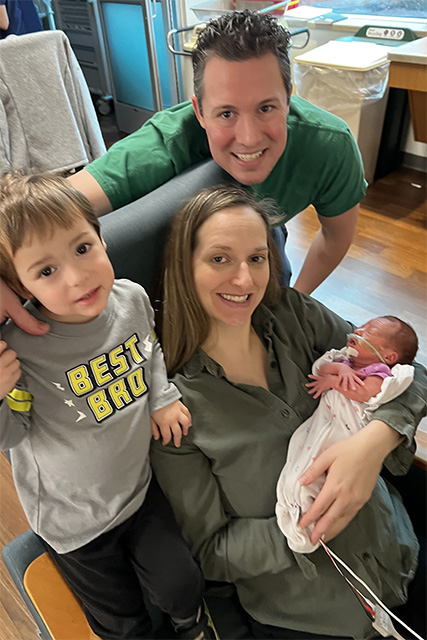
Brittany's story: Specialized care for mom and baby
In 2025, Brittany was pregnant with her second child. Due in early March, she was concerned when her water broke in the beginning of January. Having experienced a premature birth four years prior with her son, AJ, she knew it was too early.
Brittany called 911. While in transit to Bryn Mawr Hospital, part of Main Line Health, she delivered her daughter, Brynna, in the ambulance. Born just before 31 weeks, Brynna weighed just 3 pounds, 7 ounces. She was stabilized and immediately taken to the NICU for life-saving care that included respiratory support and a feeding tube.
While the NICU team cared for Brynna, Brittany required emergency surgery in the labor and delivery unit. She had a retained placenta, which means the placenta did not deliver automatically following delivery and needed to be surgically removed to prevent infection and blood loss.
"It was all hands on deck to treat me," recalls Brittany. "One of my nurses, Brianna, talked me through it all, apologizing for the pain and letting me squeeze her hand. I will never forget her."
Brittany fully recovered after her delivery and was discharged, but Brynna needed more time in the hospital. While the NICU staff provided the advanced clinical care that Brynna needed to grow and develop, they also made every effort to make the NICU feel like home. They decorated for the Super Bowl and carefully dressed Brynna in a themed outfit to celebrate Valentine's Day.
"I always felt that everyone had our best interests at heart," says Brittany.
Two months later, when baby Brynna was ready to go home, the staff hosted a NICU "graduation" where they lined the hallway, played music and cheered to celebrate the important milestone.
Today, Brynna is thriving thanks to the excellent care she received in the NICU at Bryn Mawr Hospital. At 18 months old, she is already walking and talking.
"You would never know she was a preemie," says Brittany.
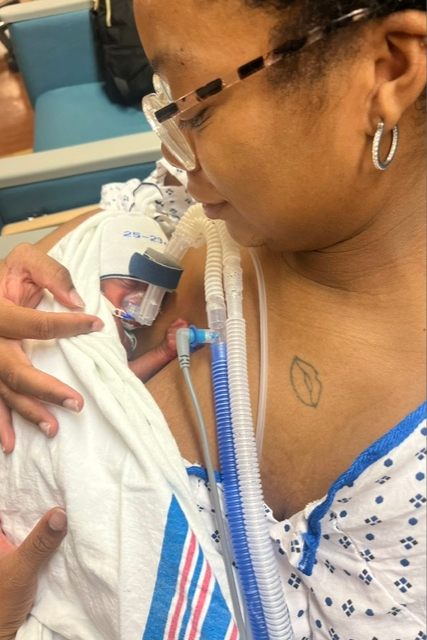
Tachina's story: Beyond NICU care
In early 2026, Tachina was thrilled to be expecting a baby boy, due in March. She enjoyed a healthy pregnancy until 24 weeks, when she was diagnosed with cervical incompetence. This condition causes the cervix to soften, shorten and dilate too early, often resulting in preterm birth or pregnancy loss.
Tachina's doctors did everything they could to give her baby more time to grow and develop before birth. They performed a procedure called an emergency cerclage, which stitches the cervix closed to make it strong enough to hold a growing baby.
When Tachina's water broke two weeks later, she was admitted to Lankenau Medical Center, part of Main Line Health, where she spent three weeks on bed rest. Despite these interventions, Tachina went into labor before 30 weeks, and welcomed her son, Aubrey.
Aubrey weighed just 3 pounds, 4 ounces and was immediately stabilized and taken to the NICU for specialized care. He received respiratory support from a bubble CPAP, which is a device that puts gentle pressure on a baby's lungs to help them breathe.
Aubrey remained in the NICU for several months, and the staff decorated his pod to celebrate each developmental milestone with Tachina and her husband, Carl. They also made holidays feel special by dressing Aubrey in festive outfits.
"I always felt like there was someone who loved our baby as much as we did and wanted us to feel as comfortable as possible," says Tachina.
In addition to caring for Aubrey, the NICU team made sure that all of Tachina and Carl's needs were met so they could focus on what mattered most — bonding with their newborn.
"The nurses felt like family to us," recalls Tachina. "They loved having Aubrey as a patient and kept us in good spirits."
Later in Aubrey's NICU stay, he was diagnosed with gastroesophageal reflux disease (GERD) and chronic lung disease. When he needed an even higher level of specialized respiratory care, his care team coordinated a seamless transfer to the NICU at CHOP's Philadelphia campus, where he could receive advanced respiratory care from a specialized pediatric team. After more than three months of NICU care, Aubrey was ready to go home.
Today, Aubrey is a happy, healthy, 8-month-old baby who is sitting up and starting to crawl. Tachina is grateful for the care and support she and her family received at Main Line Health.
"The nurses were gentle and nurturing, and they really loved their jobs," she says. "It went beyond health care, and we felt that."
Celebrating the strength of our tiniest patients
This Prematurity Awareness Month, Main Line Health celebrates the resilience of our tiniest patients, the dedication of their families and the compassion and expertise of our NICU teams. Through Main Line Health’s affiliation with CHOP, families can access specialized neonatal care closer to home, with a connection to CHOP’s broader pediatric expertise when more complex care is needed. For families, that means a more connected journey, with the right level of care in the right setting as their baby’s needs evolve. And as children grow beyond their NICU stay, families can also access specialized pediatric emergency care from Main Line Health and CHOP physicians at our pediatric emergency department, which provides comforting, high-quality, age-appropriate care for infants, children and teens 24 hours a day, seven days a week in Bryn Mawr, PA.
Next steps
If you are expecting a child, Main Line Health's Maternity program in Bryn Mawr, Media, Paoli and Wynnewood, PA offers:
- Prenatal and diagnostic testing
- High-risk pregnancy care
- Labor and delivery services
- Neonatal intensive care
- Postpartum and lactation support
Learn more about obstetrics and maternity care at Main Line Health
Related articles
Day in the life of a NICU nurse
How diversity in clinicians can reduce premature birth rates

Content you want, delivered to your inbox
Want to get the latest health and wellness articles delivered right to your inbox?
Subscribe to the Well Ahead Newsletter.