Fixing Leah’s leaky heart valve with MitraClip™ therapy

Leah Crane, Haverford, PA, is one of more than 300 people at Lankenau Medical Center treated with MitraClip™ therapy. She underwent the procedure when she was 80 years old, as a less invasive alternative to repair a leaky mitral valve, also known as mitral valve regurgitation, without the need for open-heart surgery.
Congenital heart condition diagnosed later in life
Leah was in her 40s when tests showed that her mitral valve leaflets were malformed and not closing correctly. She was born with a condition called mitral valve prolapse (MVP), though she had no symptoms. "I've never felt limited by my condition and remain active — gardening and practicing yoga, which I have continued at home during the pandemic," says Leah.
"About two and a half years ago, I became short of breath when climbing the stairs. My Main Line Health primary care physician, keeps a close eye on me, so she ordered an echocardiogram and recommended I see a cardiologist," says Leah.
Howard Kramer, MD, Leah's cardiologist at Bryn Mawr Hospital, compared her echocardiogram with earlier studies and saw that her heart function had declined, and her mitral valve was leaking. "He explained what was happening with my heart in detail. We talked about my options, including surgery, but I felt fine. And, as a two-time breast cancer survivor who had radiation to my chest, I didn't want to pursue surgery at that time."
Understanding mitral valve regurgitation
A healthy mitral valve has two flaps called leaflets that open and close with each heartbeat to keep blood flowing in one direction. When leaflets don't close sufficiently, blood can leak backward (regurgitate), forcing the heart to work much harder to pump blood throughout the body. Medication can help with symptoms but does not fix the issue. Unrepaired regurgitation can lead to severe problems such as heart failure, pulmonary hypertension or arrhythmia (irregular heartbeat).
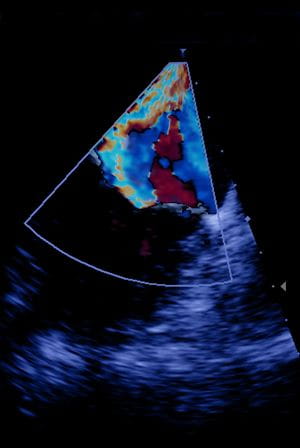
Signs of mitral valve regurgitation include:
- Fatigue
- Shortness of breath
- Coughing
- Heart murmur
- Congestion around the heart and lungs
- Swollen legs, ankles and feet
- Sometimes, no symptoms (or asymptomatic)
The MitraClip™ option
"I have been involved with the MitraClip™ technology since its early inception over 20 years ago and through the many years of research that ultimately led to Food and Drug Administration (FDA) approval in 2013," says William Gray, MD, chief of Cardiovascular Diseases at Main Line Health and co-director of Lankenau Heart Institute. "It is incredibly satisfying to see this transcatheter-based, non-surgical therapy benefitting so many individual patients in life-changing ways."
Dr. Kramer explains, "MitraClip™ is a tremendous advancement in device technology, specifically for Leah and others who are living with mitral regurgitation and who would not tolerate an open-heart surgery due to age or other health concerns. As a catheter-based option, MitraClip™ broadens the spectrum of people we can treat and help feel better with shorter hospitalization, faster recovery and reduced risk of stroke."
Life-changing treatment without surgery
Leah came across an article about MitraClip™ that prompted her to revisit the topic with Dr. Kramer. "We scheduled my procedure for January 2022, which coincided with a surge of COVID-19," says Leah. "At first, I was more concerned about getting COVID than the MitraClip." Fortunately, as the team prepared for the minimally invasive procedure and discussed what to expect, Leah felt comfortable and was reassured.
The MitraClip™ procedure requires collaboration among cardiac surgeons, interventional cardiologists, cardiac imaging specialists and advanced care nurses who have specialized in structural heart and valvular disease. Dr. Gray teamed up with Scott Goldman, MD, director of the Structural Heart Program and Katie Hawthorne, MD, director of cardiac MRI and a non-invasive cardiac imaging specialist at Lankenau Medical Center, to perform Leah's procedure.
In the operating room and with Leah asleep, the team worked together, threading a tiny, fabric-covered metal clip through a puncture in the femoral vein in Leah's leg and up to her heart using a tube called a catheter. Using ultrasound and X-ray to guide them, they positioned the clip directly at the area where the mitral valve was leaking and then released it, pinning the two leaflets together and reducing her heart's regurgitation.
"My care was outstanding from start to finish, and the nurses were wonderful," says Leah. "I was astonished by how good I felt after the procedure."
Back in action right away
Leah went home the next day. "I was comfortable and had no pain. The only evidence of my surgery was a bruise on my upper thigh from where the catheter was inserted."
“That same morning, I went up and down the stairs a few times and did not feel short of breath," Leah says.
An avid reader, Leah loves spending time with her family, gardening, taking walks and playing canasta — activities she can enjoy even more now that her heart doesn't have to work so hard.
Outstanding heart valve expertise
Main Line Health’s cardiovascular specialists are recognized for their expertise in heart valve care, performing a high volume of advanced valve procedures. Ongoing program growth and an expanding portfolio of clinical trials bring the latest innovations to patients, supporting excellence in cardiovascular care. Learn more about the minimally invasive treatment options available at Main Line Health to treat heart valve disease.
Next steps:
Make an appointment with William Gray, MD
Make an appointment with Howard Kramer, MD
Explore heart and vascular care at Main Line Health
Want o learn more about patients who have had success with MitraClip™ therapy? Meet Carol, who had the procedure in January 2019, and Greg, who had it in November 2022.
Related articles
What to know about heart disease and diabetes
Revolutionizing heart care through the power of advanced imaging
New trial for heart failure with preserved ejection fraction (HFpEF): Sue Ellen's Story

Content you want, delivered to your inbox
Want to get the latest health and wellness articles delivered right to your inbox?
Subscribe to the Well Ahead Newsletter.